
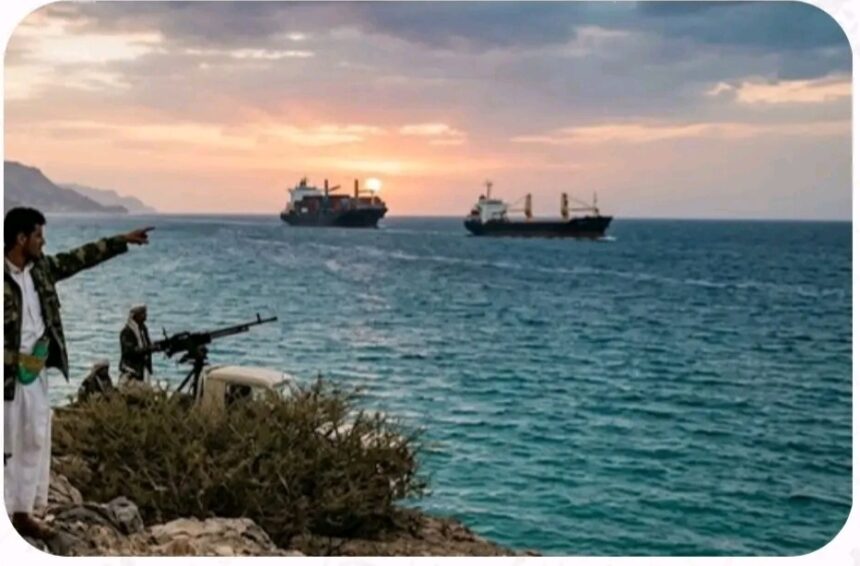
Iran-aligned Houthi forces have seized Yemen’s strategic port city of Mocha and advanced along the Red Sea coast toward islands near the Bab el-Mandeb Strait, increasing the threat to Saudi Arabia’s oil exports and internationally shipping.
Yemeni government military sources told Reuters that the Houthis captured Mocha on Thursday and moved toward the Hanish Islands, giving the group greater leverage over the Bab el-Mandeb Strait, a major shipping route linking the Red Sea with the Gulf of Aden.
The development comes as the wider US-Iran conflict continues to disrupt major oil routes across the region.
The Houthis’ advance is significant because Saudi Arabia has increasingly relied on the Red Sea route to move oil to international markets after the conflict severely disrupted shipping through the Strait of Hormuz. Saudi Arabia has been exporting about four million barrels of oil a day through its Red Sea port of Yanbu.
The Bab el-Mandeb Strait is one of the world’s major maritime chokepoints, connecting the Red Sea to the Gulf of Aden and providing a key route between Europe and Asia through the Suez Canal. Around 12% of global trade passes through the waterway, making any sustained disruption a potential threat to international shipping and energy supplies.
Yemen’s Houthi-run humanitarian operations coordination centre said navigation in the Red Sea remained safe for shipping companies except Saudi vessels. Yemeni government forces and their allies have meanwhile been moving south along the Red Sea coast toward Dhubab, near the Bab el-Mandeb.
The Houthis have previously threatened Saudi-linked shipping and declared a naval blockade against Saudi Arabia. In July, the group said it would target vessels connected to Saudi Arabia or using Saudi Red Sea ports, raising fears that attacks could force commercial ships to avoid the waterway altogether.
The group’s actions have already affected global energy markets. More than seven million barrels of petroleum a day passed through the Bab el-Mandeb in June, up from about four million barrels before the Iran war. Rerouting ships around the Cape of Good Hope can add one or two weeks to voyages and increase transportation costs.
The latest advance also raises the possibility of a wider confrontation along Yemen’s Red Sea coast. The United Nations special envoy for Yemen, Hans Grundberg, told the Security Council that the country had entered what he described as a “new and more dangerous phase” of the war.
The Houthis have controlled large parts of northern and western Yemen, including the capital, Sanaa, for years. Their renewed military campaign comes after the group became more directly involved in the wider regional conflict and began targeting Saudi interests after a period of relative restraint.
The immediate concern is whether the Houthis can establish sustained control over positions around the Bab el-Mandeb. Any further advance toward the strait could put additional pressure on Saudi oil exports and force more commercial vessels to seek longer alternative routes, adding to disruptions already caused by the closure of the Strait of Hormuz.