
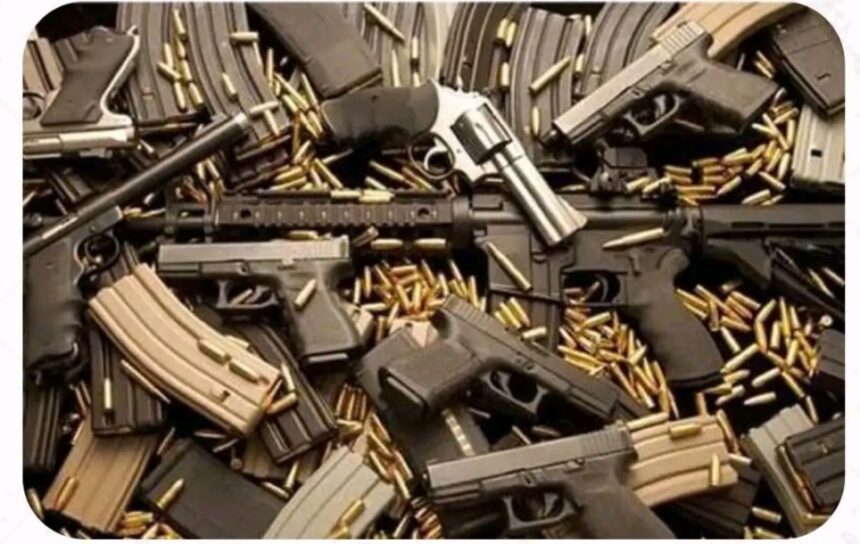
Nigeria imported arms and ammunition worth N22.5 billion between April and June 2026, according to a review of foreign trade statistics published by the National Bureau of Statistics (NBS).
The figure covers the second quarter of 2026 and comes amid continuing concerns over insecurity and the proliferation of illegal weapons across the country.
In the first quarter of the year representing January to March 2026, a sum of N32.5 billion was spent on arms and ammunition importation.
This would mean between January and June, 2026, a sum of N55 billion was spent on the importation.
The latest import figures add to the billions of naira Nigeria has spent importing arms and ammunition in recent years.
A previous SaharaReporters review of NBS foreign trade statistics for the third quarter of 2025 showed that Nigeria spent N827.1 billion on arms and ammunition imports between 2020 and September 2025, covering five years and nine months.
The data showed that arms and ammunition imports stood at N29.2 billion in 2020.
The figure increased to N72.4 billion in 2021 before declining to N28.2 billion in 2022.
doc
Import spending rose sharply in 2023 to N127.1 billion and surged further in 2024, reaching N520 billion.
Between January and September 2025, Nigeria imported arms and ammunition worth N50.2 billion.
The N22.5 billion recorded in the second quarter of 2026 therefore adds to an already substantial import bill on arms and ammunition.
The development comes against the backdrop of persistent insecurity, including attacks by terrorist and other violent groups, as well as concerns about the availability and circulation of illicit firearms.
In June 2025, SaharaReporters reported that the United States had raised concerns over the increasing spread of weapons among violent extremist groups in Nigeria and other parts of the Sahel following its withdrawal from Niger Republic.
The warning was issued during a “Digital Press Briefing on the African Chiefs of Defense Conference 2025,” which featured the then Commander of the U.S. Africa Command, U.S. Marine Corps General Michael Langley.
“I’ll just say that since we’ve left Niger in September of last year, we’re observing a rise in attacks by violent extremist organizations, not only in Niger but across the Sahel to include Nigeria as well and emanating in – going into Burkina Faso and Mali,” Langley noted.
“Now, this increase is measurable by both frequency and complexity of these attacks, driven by persistent and socioeconomic grievances and the proliferation of weapons and increased capable terrorist groups across the board.”
“So unfortunately with our withdrawal from the region, we have lost our ability to monitor these terrorist groups closely but continue to liaison with partners to provide what support we can.”
The concerns were also echoed by Nigeria’s military leadership.
In July 2025, then Chief of Defence Staff, General Christopher Musa, raised concerns over the concentration of illicit arms in Nigeria, saying the country harboured an estimated 40 per cent of all illegal weapons circulating in West Africa.
Musa made the disclosure while delivering the second Distinguished Personality Lecture organised by the TETFund Centre of Excellence in Security Management at Trenchard Hall, University of Ibadan, Oyo State.
Speaking on the theme, “Global Fragility and Security Management in Nigeria,” Musa stressed the need for Nigeria to overhaul its security strategies.
He warned that instability around the world continued to have implications for Nigeria’s domestic security situation.