
Residents of Anguwa Rimi, Kwamba Low-Cost in Suleja, Niger State, are reportedly receiving basic healthcare in a dilapidated primary healthcare centre despite the facility serving a community of about 4798 people.
The condition of the facility was highlighted by MonITNG in a post on X on Friday, which called on Niger State Governor, Mohammed Umaru Bago, to urgently intervene.
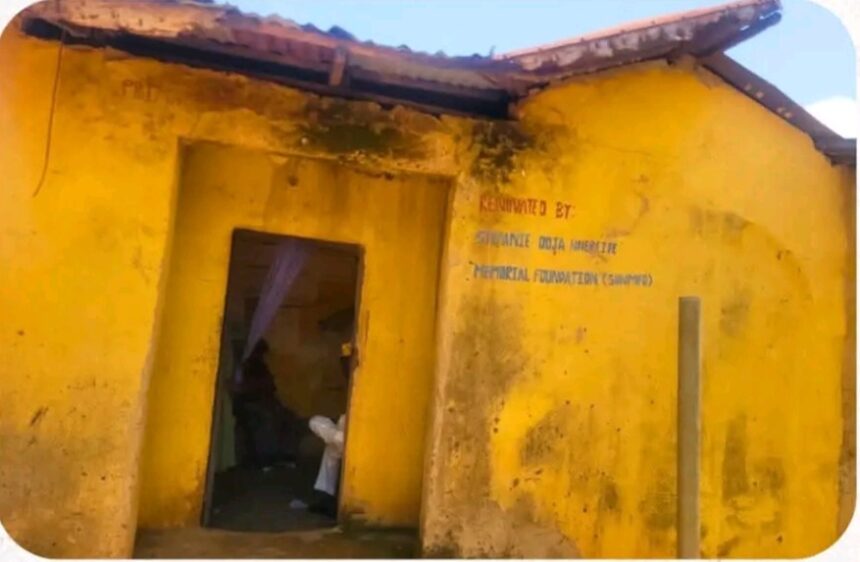
Photographs shared by the organisation showed a damaged ceiling with sections appearing to have caved in, while water stains were visible on the ceiling and walls.
The organisation also said one of the rooms contained a worn-out bed with a torn mattress for patients.
According to MonITNG, the facility serves as the community’s only primary healthcare centre and is used by residents, including pregnant women and mothers bringing their children for immunisation.
“The ceiling is badly damaged, with parts of it caving in and exposing the structure above. Water has clearly found its way through the roof, leaving stains across the ceiling and walls,” the organisation said.
“If this is the result of a renovation, then residents deserve to know what work was actually carried out and how much was spent,” the organisation said.
It called on the Niger State Government to disclose details of the reported renovation, including the amount spent and the contractor responsible for the project.
The organisation also urged the government to inspect the facility and urgently address the problems affecting healthcare delivery in the community.
“Primary healthcare is the first point of contact for millions of Nigerians. It should provide a safe and decent environment for patients, especially children, pregnant women and vulnerable residents,” it said.
The concerns were raised against the backdrop of Niger State’s revenue from the Federation Account Allocation Committee (FAAC).
Data on first-quarter 2026 allocations shows that Niger State received approximately ₦48.37 billion in FAAC allocations between January and March 2026.
The figure places Niger among the states that received substantial allocations during the period.
MonITNG questioned why communities such as Anguwa Rimi would continue to depend on a facility in such condition despite the resources available to the state.
“With such significant resources available to the state, communities like Anguwa Rimi should not still be receiving healthcare in facilities in this condition,” the organisation said.
It urged the state government to explain how funds allocated for healthcare and infrastructure were being deployed.
MonITNG called on Governor Bago and relevant authorities to visit the facility, assess its condition and take immediate steps to restore it.
It also demanded transparency over the reported renovation of the health centre, asking the government to publish details of the work carried out, the amount spent and the contractors involved.
“Public funds must translate into better services for the people,” the organisation said.
“The people of Anguwa Rimi deserve better.”
The organisation also tagged Nigeria’s Coordinating Minister of Health and Social Welfare, Muhammad Ali Pate, in its appeal for intervention.
The condition of the facility has also raised broader concerns about the quality of primary healthcare infrastructure in communities where PHCs serve as the first point of contact for residents.
Official polling-unit records identify a Basic Health Centre in Kwamba within Suleja, while Ang. Rimi is also listed among communities in the area.